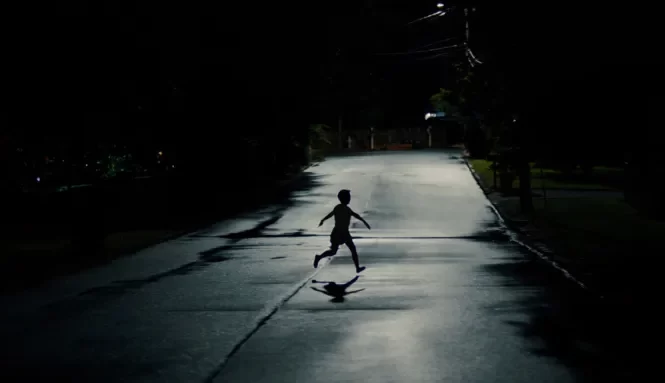
“Confuscious said: wise men like the water, benevolent men like mountains. I am not benevolent, I like the Sea.”

I absolutely love films like Park Chan Wook’s “Decision to Leave”; films with a story that we’ve seen before, but told in a way that makes you feel like you are seeing it for the first time.
The film follows a detective (played by Jang Hae-Joon) who is investigating a death at the foot of a mountain. From the looks of it, it seems as though the man is a mountain climber who potentially had a fatal slip. He also happens to have a wife (played by Song Seo-rae) who seems a little off. She doesn’t seem all that upset that her husband is dead and the detective has his suspicions that she may have played a part in his death. However, he becomes incredibly enamored with her and it slowly upends his life. I don’t want to reveal too much about what happens next, but it’s not hard to imagine. This basic framework of a cop-criminal love story and the femme fatale, we’ve seen countless number of times; however, it’s rarely as well portrayed as in this film.
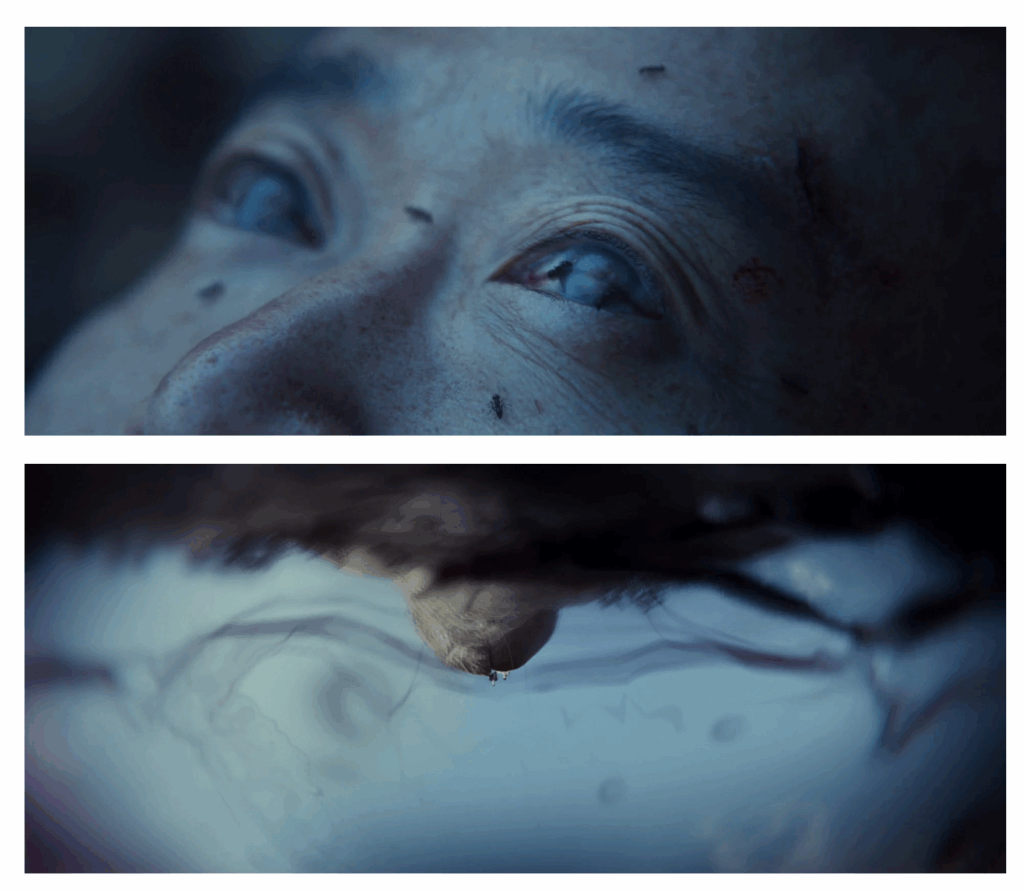
While “Decision to Leave” may be treading familiar waters on paper, visually it is one of the most impressive films I have seen in the past few years. Take for example the murder scene at the foot of the mountain. The scene begins as we look down into a forest with a bunch of flashlights passing through the trees, almost as if we are looking into a maze. Then we see the detectives looking up from the dead body to the mountain he fell from. We then travel with the detectives as they climb up the mountain. And then we get a shot of the detective’s eye looking down at the corpse and then we get a shot from inside the eye of the dead mountain-climber, as an ant crawls across his face, looking up at the detective on top of the mountain. Not only is it an eerie image, but it concludes an incredibly methodical scene of an investigation that in the hands of many other directors would’ve been quite bland. But in the hands of Park Chan Wook, we are getting this visual language being built up in the film between highs and lows (the mountain and the sea as we will later come to learn). And this visual imagery comes up again and again throughout the film, including during it’s incredibly heart-breaking ending sequence. While most crime scene investigations are just pushing forward a plot, here we are seeing the basis of the entire story being built.
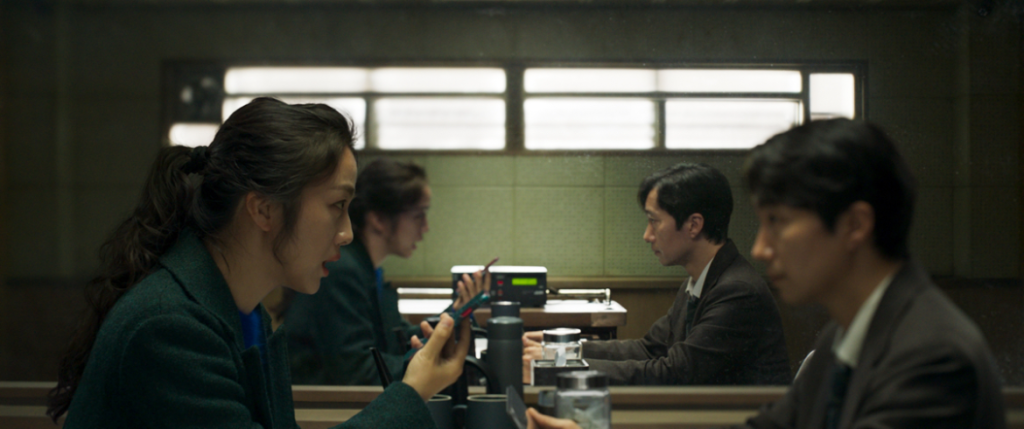
And it’s not just this scene. One of the most impressive aspects of this film is how it takes these generic scenes that people expect to see in a detective story, and presents them in new and interesting ways. When the detective is spying on his suspect with binoculars, he suddenly gets put into the scene he is observing. There is also an incredible interrogation scene where we see the detective and suspect mirrored and with shots that split the image between a monitor showing a recording of the suspect and the suspect actually speaking inside the interrogation room. While these are scenes we’ve seen in many films, Park Chan Wook always seems to find a way to make them feel new. Moreover; all of this is quite subtle, but the visual beats of the film layer on top of each other as we go through the film.
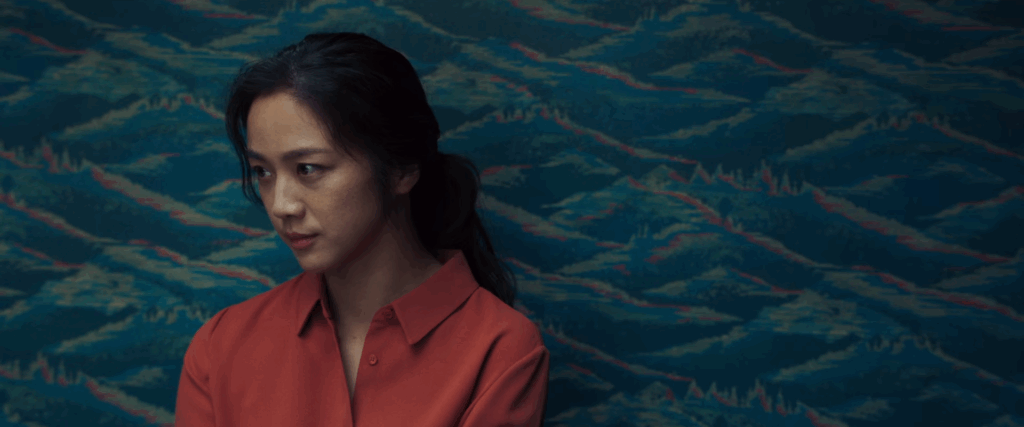
The cinematography by Kim Ji-yong is absolutely stunning, he uses these deep blues and greens whenever Song Seo-rae’s character is on the screen and then we also get these contrasting oranges and reds that seem to be prominent in the detective offices. The score by Cho Young-wuk is also one of my favorite aspects of the film and it adds to the whimsical nature of some of the scenes in the film.
The acting by Jang Hae-Joon and Song Seo-rae is also incredibly well-done. The film plays with languages as the characters switch between speaking Korean and Mandarin, these were subtleties which I couldn’t quite catch unless the character was outright saying they were speaking in another language. And I’m sure there are many other cultural subtleties that I missed as well, but it never felt like I was missing a core part of the story.
Some may say that this is Park Chan Wook’s most reserved film, especially when compared to films like “The Handmaiden” and “Oldboy”. I can understand why some people may find this story bland. But for me, what it lacks in the novelty of its story it more than makes up for in the richness of its visuals. This is a film with the director as the star and he shines. I have no doubt in my mind that this is a film that will reward multiple re-watches as there are so many fine details put into each and every shot, and I do think this is a film on par with some of Wook’s best efforts.