
“Unable to perceive the shape of You, I find You all around me. Your presence fills my eyes with your love, it humbles my heart, for You are everywhere.”
When Guillermo Del Torro’s “The Shape of Water” first came out in 2017, I was a freshman in college trying to figure out what I was doing with my life and fighting to make sure that film had a place in it. I specifically remember the notorious fish sex scene, the incredible escape sequence, and the dream-like visuals. I remember liking the film, but I don’t think I loved it. Perhaps the ending was too abrupt or maybe I thought the story was a bit too corny and romantic. Whatever the reason, I was glad to see Del Torro finally get the recognition he deserved, with this film earning him the Oscar for Best Director.
Now, I’m about to graduate medical school and become a doctor. Funnily enough, I’m still unsure of exactly what I’m gonna do with my life and I’m still fighting to make sure that film has a place in it. I don’t know why but I found myself wanting to rewatch this film a few nights ago, and this time I absolutely fell in love with it.
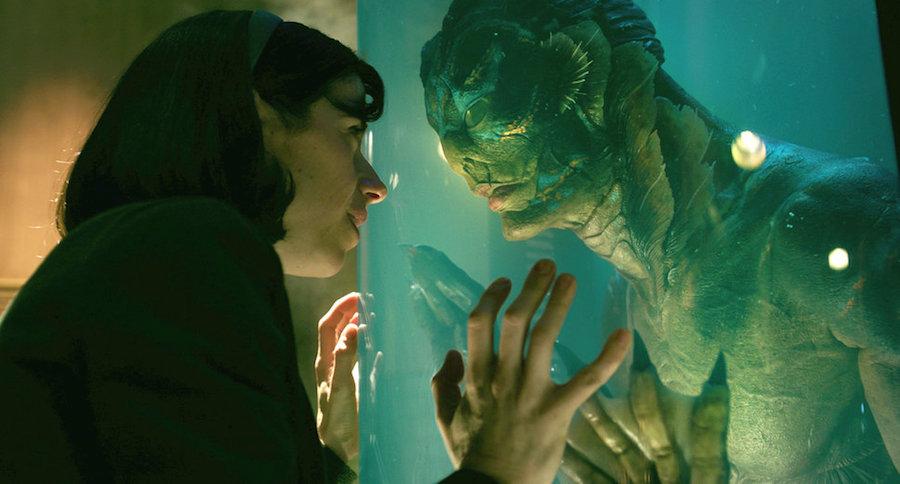
“The Shape of Water” is infused with a love of cinema, which feels fitting, as film is a medium through which we step into lives that are not our own. This is a film that is adamant about making us feel and understand difference. The main character, Elisa (Sally Hawkins), is mute. Her best friend is a Black woman, Zelda (Octavia Spencer). Her neighbor is a closeted gay man, Giles (Richard Jenkins). And her lover is an Amazonian fish god (Doug Jones). That last part is what truly makes this a Del Torro film.
The movie unfurls by taking us through the day in the life of Elisa. We see her wake up, set an egg timer, masturbate, go to work, etc. Elisa happens to work at a top secret military base where she fluffs the underbellies of missiles and sweeps the floors of experimental holding cells. It’s here that we meet the film’s antagonist, Colonel Strickland (Michael Shannon). The film is set in a semi-fictional Cold War Era, a time where phrases like “Better dead than red” were casually thrown around. Strickland is perfectly emblematic of this worldview, believing in a hierarchical society set by titles, power, and possessions. There is a wonderful sequence where he goes to buy a Cadillac, not because there was anything wrong with the car he already had, but because he craves the authority and status the car represents.
Del Toro is a master of world-building, and this film is one of his finest examples. There’s a palpable rhythm to the first half of “The Shape of Water” that expertly introduces its cast of characters while setting up the central conflict: a humanoid amphibian creature brought into the military facility by Strickland for experimentation and eventual dissection. Elisa, who has a tendency to attach herself to outsiders, naturally forms a bond with the creature and ultimately devises a plan to break him out. There’s also a subplot involving a Russian spy (Michael Stuhlbarg), who attempts to help her, a rare example of a Cold War era film that allows for good people on both sides of the aisle.
Del Torro’s love for creatures is evident throughout all of his work, but this film really encapsulated to me why that is. Throughout the film we see people who are different from the norm being treated like they are lesser human beings not even worthy of consideration. Difference, whether in skin color, language, disability, or sexuality, is framed as something monstrous. But Del Toro makes it clear that the true monsters are those who dehumanize others because of those differences.
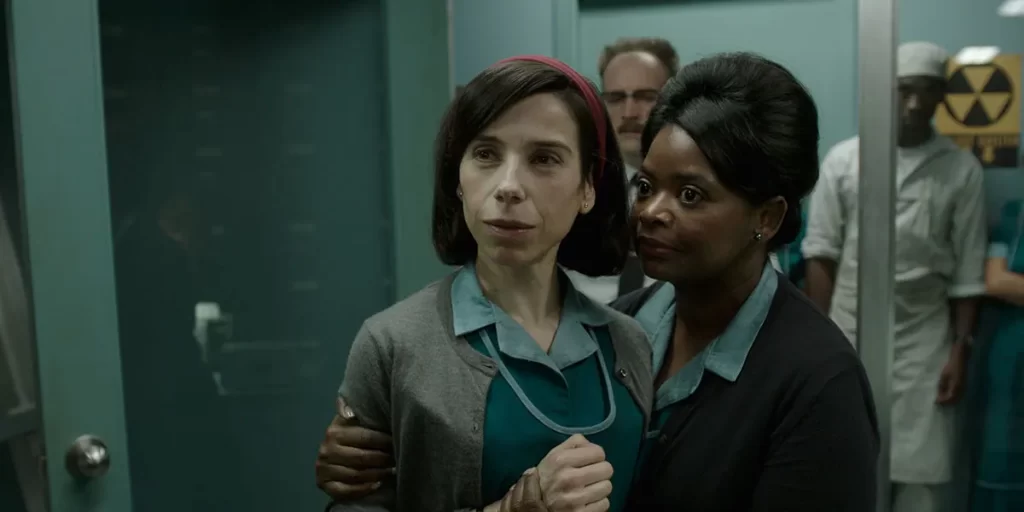
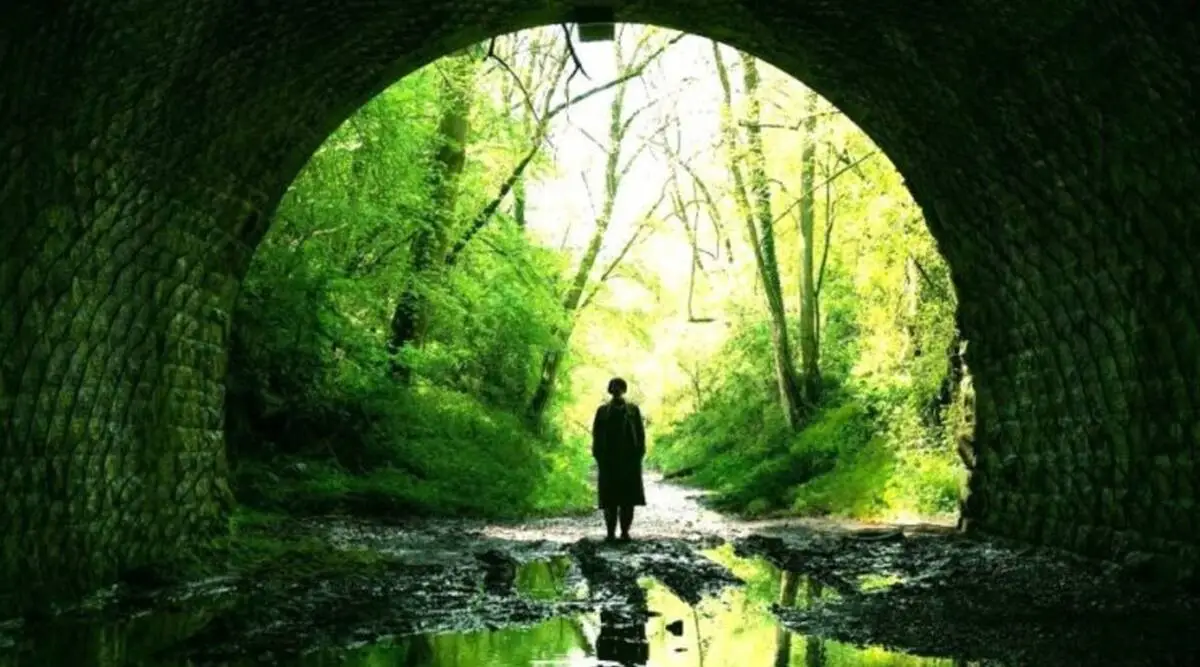
Much of the film’s emotional pull also comes from its meticulous cinematography and production design. Dan Laustsen’s camera bathes the film in deep greens and watery blues, creating the feeling that we’re always submerged. Paired with this is Paul D. Austerberry’s production design, which turns the Cold War setting into a kind of industrial fairy tale. Elisa’s apartment, perched above an old cinema and filled with soft curves and muted decay, contrasts beautifully with the rigid, fluorescent brutality of the military facility. Every space and every color feels intentional.
If I have criticisms of the film, they’re minor. The second half can slightly lag, especially when compared to how electric and tightly constructed the first half feels. The ending is abrupt, and a few characters make some unconscionably dumb decisions, but I digress.
Like the best films, “The Shape of Water” reminded me why I love movies in the first place, and that may be the greatest compliment I can give it. The film stayed with me long after my rewatch a few nights ago. It reminded me that some things don’t need to be fully understood, named, or defined to be deeply felt. That meaning and connection can exist even when language fails, when certainty is absent, when the future feels shapeless. Watching it now, at a moment in my life that feels similarly undefined, I found comfort in the idea that you don’t always need to perceive the shape of what’s ahead to know it’s there.